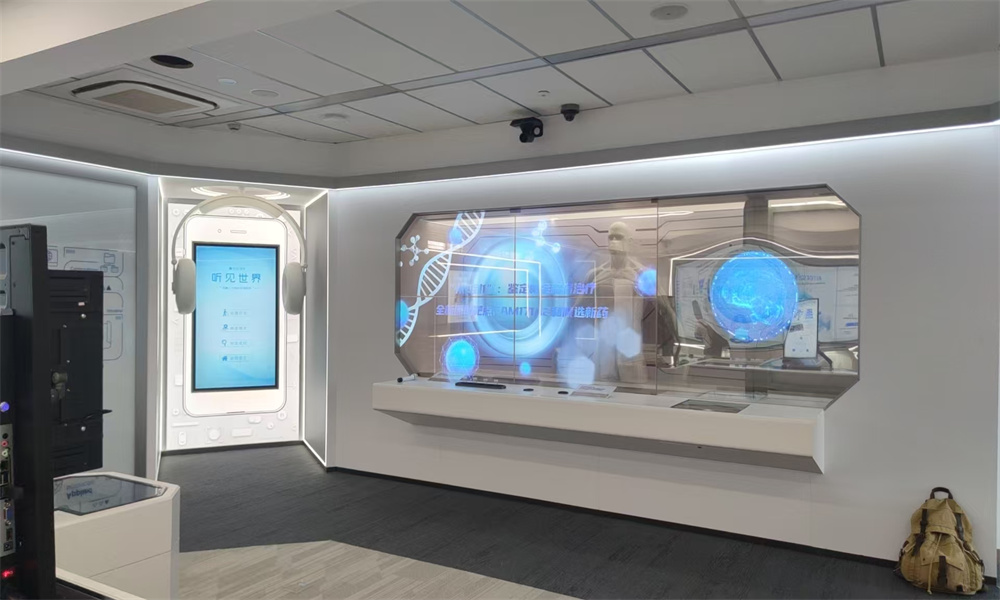
High Transparency: OLED transparent screens typically have a transparency of 40% -50%, allowing for clear visibility of objects or scenes behind them while displaying content, creating a visual effect that combines reality and virtuality.
Self luminous: No need for backlight module, each pixel independently emits light, the black color is pure, the contrast is extremely high (usually over 1000000:1), the colors are bright and the layers are rich.
Ultra thin design: The OLED screen has an extremely thin thickness, and the overall thickness after splicing is controllable, making it easy to install and integrate into various environments.
Wide viewing angle: A viewing angle of nearly 180 ° ensures that the audience can have a consistent viewing experience from different positions.
2 × 2 splicing advantage
Large size display: After splicing, it forms a large display area of about 110 inches, suitable for displaying high-definition videos, dynamic content, or interactive experiences.
Seamless splicing: The OLED screen has extremely narrow borders, and the gaps after splicing are almost invisible, resulting in excellent picture coherence.
Modular design: The splicing method can be flexibly adjusted according to requirements (such as 2 × 2, 3 × 3, etc.), making it easy for later expansion or modification.