
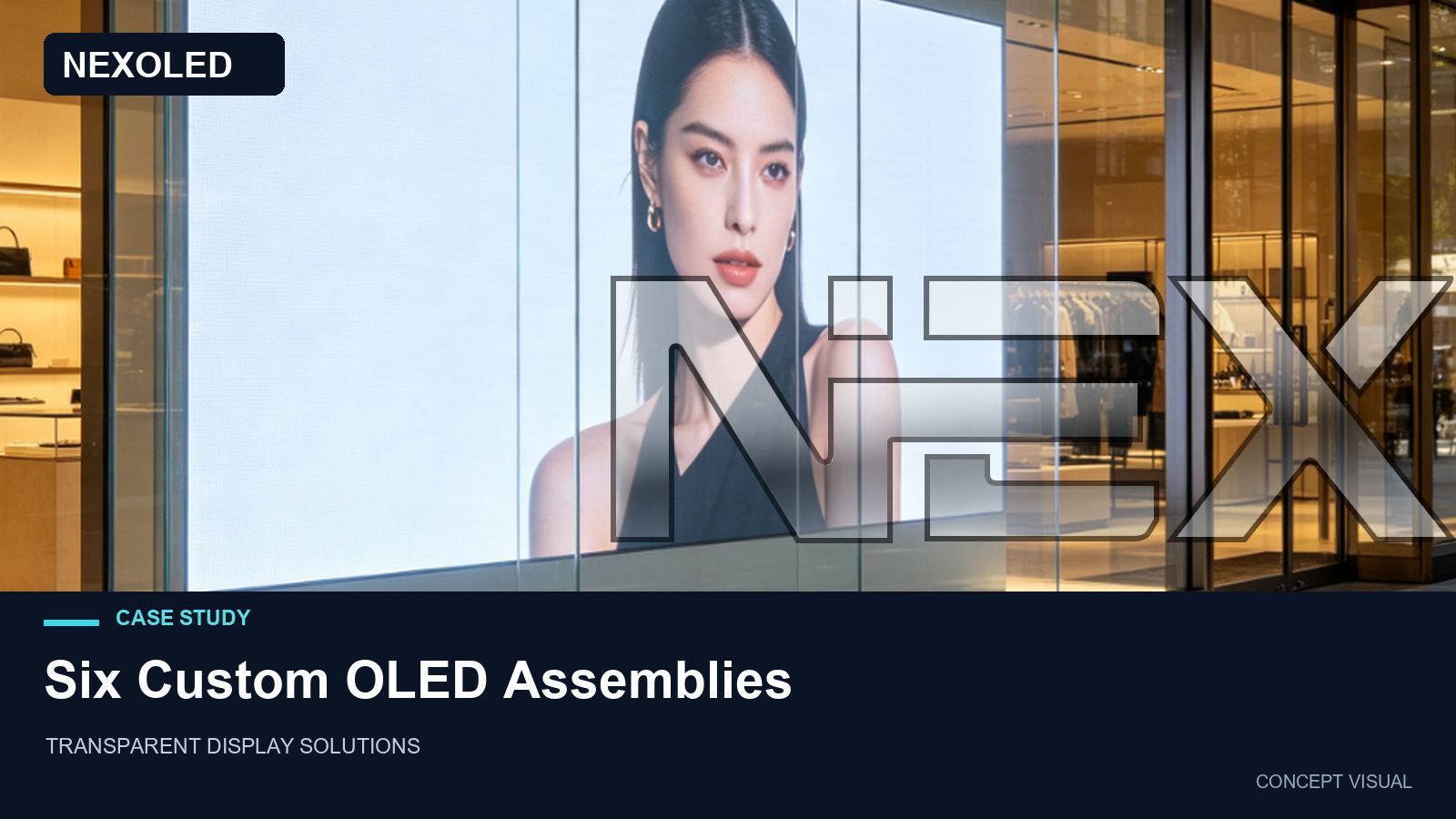
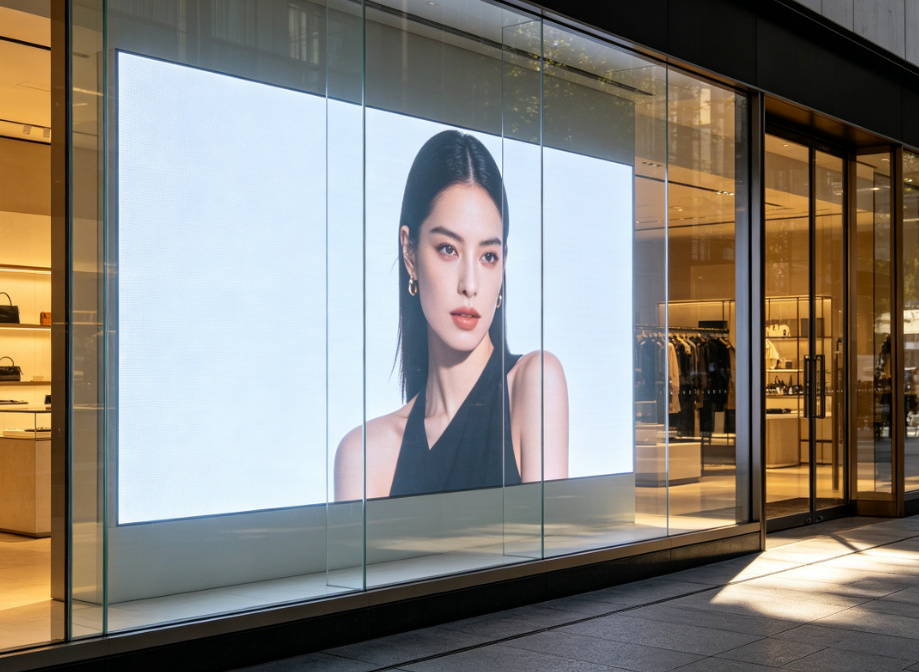
A coordinated configuration of twelve 55-inch transparent OLED panels demonstrates an integrated approach to multi-unit display design.
A transparent display should contribute to its surroundings as well as carry digital content. This Zhejiang project brings that principle into focus through six custom assemblies, each combining two 55-inch transparent OLED panels in a 2×1 layout. Together, the assemblies use twelve panels in a coordinated configuration.
The project description includes customized enclosures, touch interaction and coordinated playback. These elements matter because a successful installation depends on more than panel selection: the structure, content system and interaction method all need to work together. Packaging the screens as complete assemblies provides a clear framework for addressing those requirements across multiple units.
For a configuration like this, content design deserves the same attention as hardware integration. Short messages, clearly separated visual elements and carefully planned transitions can help the physical setting remain part of the experience. Text and interface elements should be tested at the intended viewing distance, with particular attention to backgrounds visible through the screen.
The useful lesson is the value of planning at system level. Panel arrangement, enclosure design, playback and interaction should be considered together, rather than treated as separate purchases. For teams exploring a similar installation, NEXOLED recommends beginning with a site assessment and a content mock-up before finalizing the configuration. The reference project illustrates a multi-unit approach; performance at another site will depend on its own lighting, content and integration requirements.
Discuss your transparent display project with NEXOLED.

Tel:+86-18576612314
Email:admin@nexoled.com
WhatsApp:+86 17777782574
