
Application Solution of OLED Display Screen in Cultural and Creative Industry
OLED transparent screens are reshaping the “human object field” relationship in the cultural and tourism industry. Through “digital transparency” technology, they not only protect the material carrier of civilization, but also activate the dissemination energy of culture.
Industry Pain Points

Poor environmental adaptability: severe interference from light, temperature, and humidity
The lighting conditions in cultural and museum scenes are complex (such as strong natural light, low – light exhibition halls). Traditional display screens are prone to difficulties in content identification due to reflection, insufficient brightness, or low contrast. At the same time, the temperature and humidity in some exhibition halls fluctuate greatly (such as underground ruins, constant – temperature and constant – humidity display cabinets). Display screens may malfunction due to poor heat dissipation or material intolerance.

The contradiction between content presentation and cultural relic protection
In cultural heritage scenarios, there is a need to balance the requirements of information display and cultural relic protection. Traditional display screens may accelerate the fading of cultural relics due to blue light, ultraviolet light, or heat radiation, while low-radiation display screens may sacrifice the display effect. In addition, static display methods (such as text + pictures) are difficult to attract young audiences.

High operation and maintenance costs: Difficulties in content update and equipment maintenance
The display screens in cultural and museum scenarios need to update content frequently (such as temporary exhibitions, academic research results). However, traditional devices rely on professional operation, which is time – consuming and labor – intensive. At the same time, the display screens deployed in a decentralized manner (such as in multiple exhibition halls) need to be managed uniformly, but there is a lack of a centralized control platform.

Insufficient interactive experience: Low audience participation
Traditional displays mainly focus on one-way information transmission, lacking personalized and immersive experiences, and it is difficult to meet the needs of Generation Z audiences for “technology + culture”. At the same time, insufficient multilingual support also restricts the visiting experience of international tourists.
Solution Value

Unobstructed transparent display: "Virtual-real fusion" of cultural relics and digital content
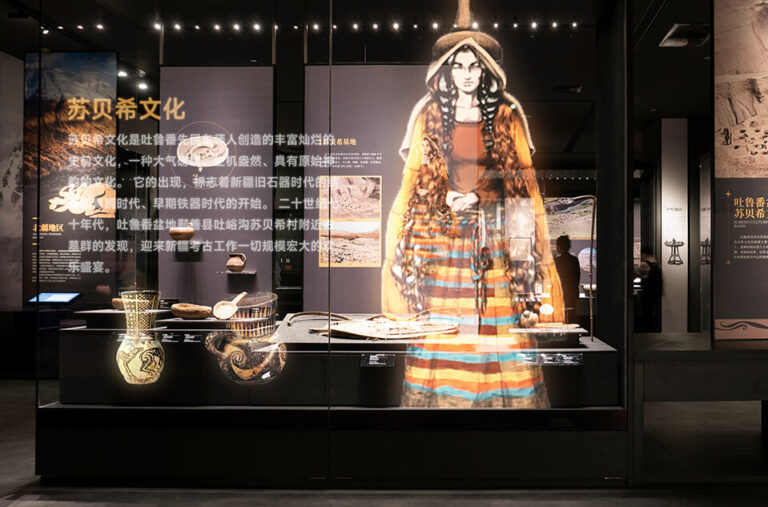
The transparency of OLED transparent screens can reach 43%, while traditional LCD transparent screens have a transparency of about 10% -30%. When displaying content, they can still clearly see through the cultural relics or scenes behind them. This feature allows digital information and physical cultural relics to be overlaid and presented, achieving an immersive experience of “exhibits as interfaces”.
Self luminous and high contrast: the ultimate picture quality in low light environments
OLED does not require a backlight module, and each pixel emits light independently, achieving pure black display (with a contrast ratio of 200000:1) and precise brightness control (usually 200-600cd/m ²). This characteristic makes it perform well in low light environments of cultural and museum scenes, such as ancient tombs and nighttime exhibitions.
Interactivity and Intelligence: From "Unidirectional Display" to "Bidirectional Dialogue"
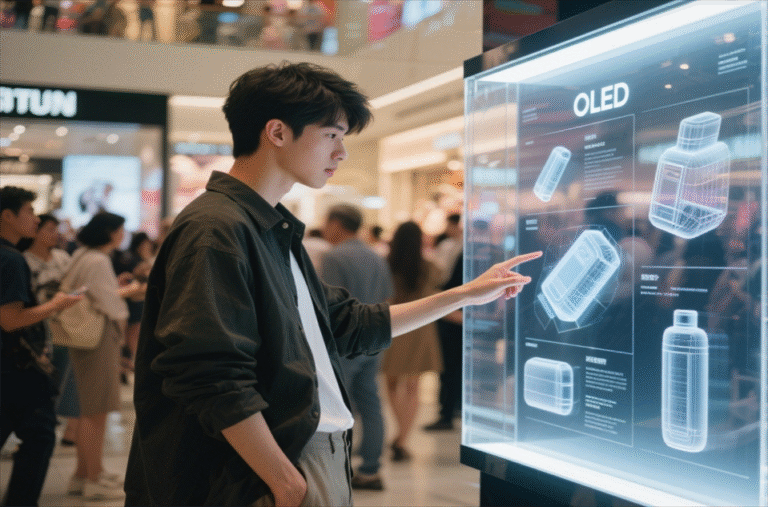
OLED transparent screens can integrate touch, voice recognition, gesture control, AR/VR and other technologies to achieve multimodal interaction. Combined with AI algorithms, it is also possible to dynamically adjust content based on audience behavior, such as dwell time and visual focus.
How OLED transparent screens reshape the future of cultural museums
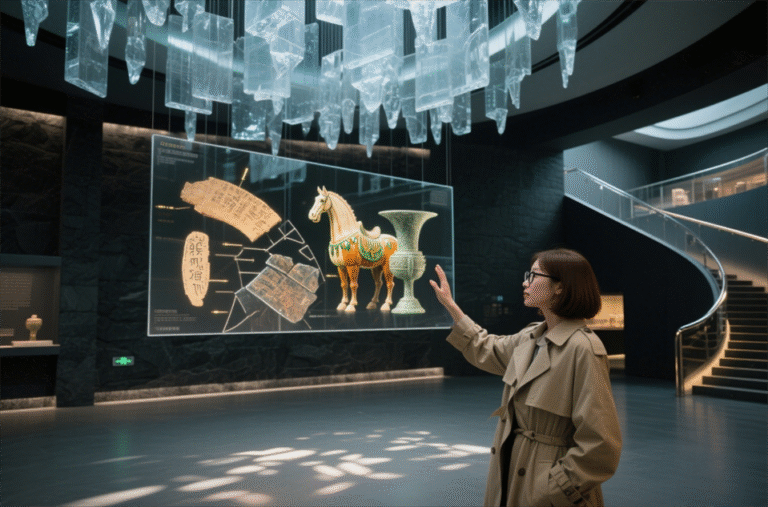
The combination of transparent display and high image quality creates an immersive exhibition experience. Multimodal technology endows the audience with a sense of participation and deepens cultural understanding. Technological means lower the threshold of historical knowledge and attract young people. Low energy consumption and sustainable design are in line with the development direction of modern museums.
Application Scenarios
Built-in Display for Artifact Display Cases
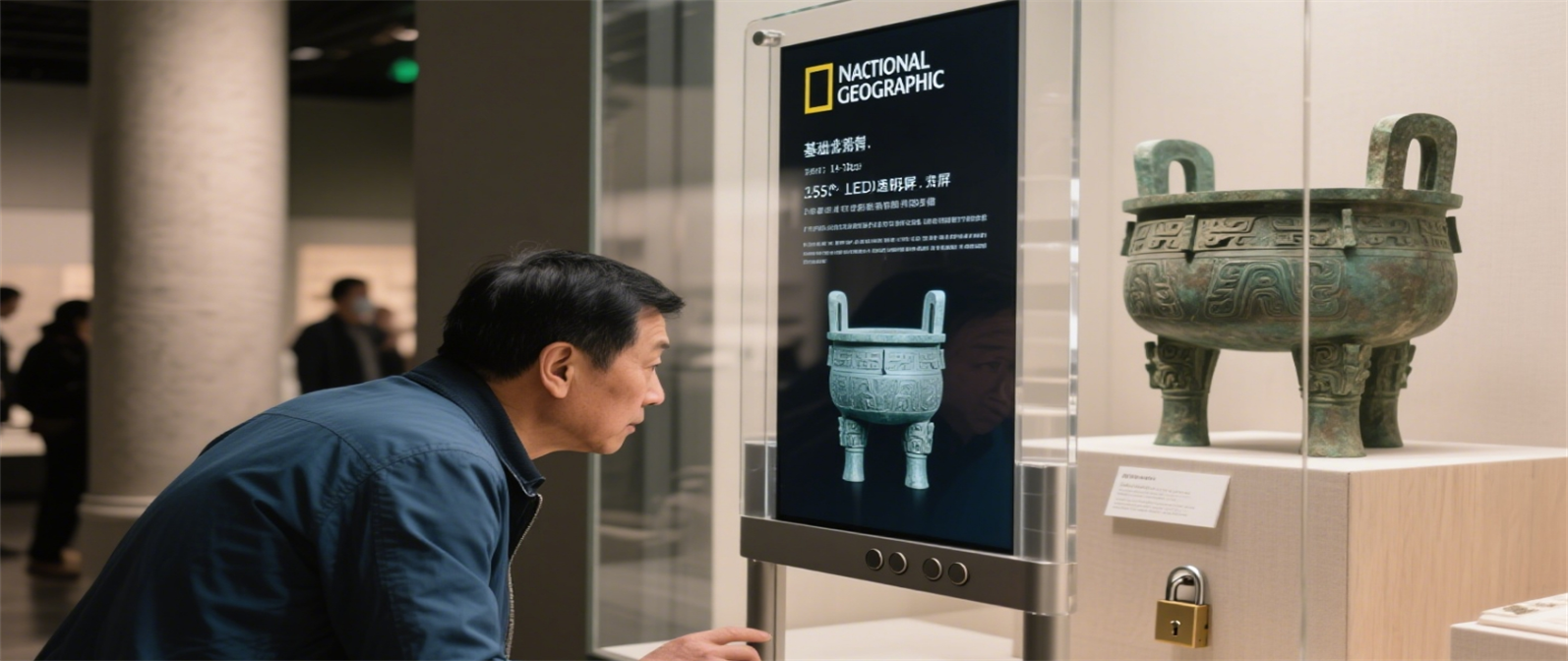
Traditional displays are often thick, opaque, and prone to image distortion at low brightness — disrupting the visual integrity of display cases and distracting from the artifacts themselves. JM Technology’s COB Crystal Transparent Display solves this with an ultra-slim profile of just 1cm and 93% transparency, seamlessly integrating into the case without obstructing the view. Its adjustable brightness of up to 5000 nits ensures perfect image quality even at low luminance, allowing for a clear and immersive presentation of digital content while preserving the authenticity of the artifact. This creates a truly “invisible” digital display case.Traditional displays are usually thick and opaque, and are prone to image distortion at low brightness, which damages the visual integrity of the display casing and distracts people’s attention from the artifacts themselves. OLED transparent displays solve this problem with their ultra-thin form factor of only 1cm and 43% transparency, seamlessly integrated into the casing without obstructing the line of sight. Its adjustable brightness can reach up to 600 nits, ensuring perfect image quality even at low brightness levels. While maintaining the authenticity of the workpiece, it can present digital content clearly and authentically. This creates a truly ‘invisible’ digital display cabinet.
Interactive Projection on Historic Building Walls / Windows
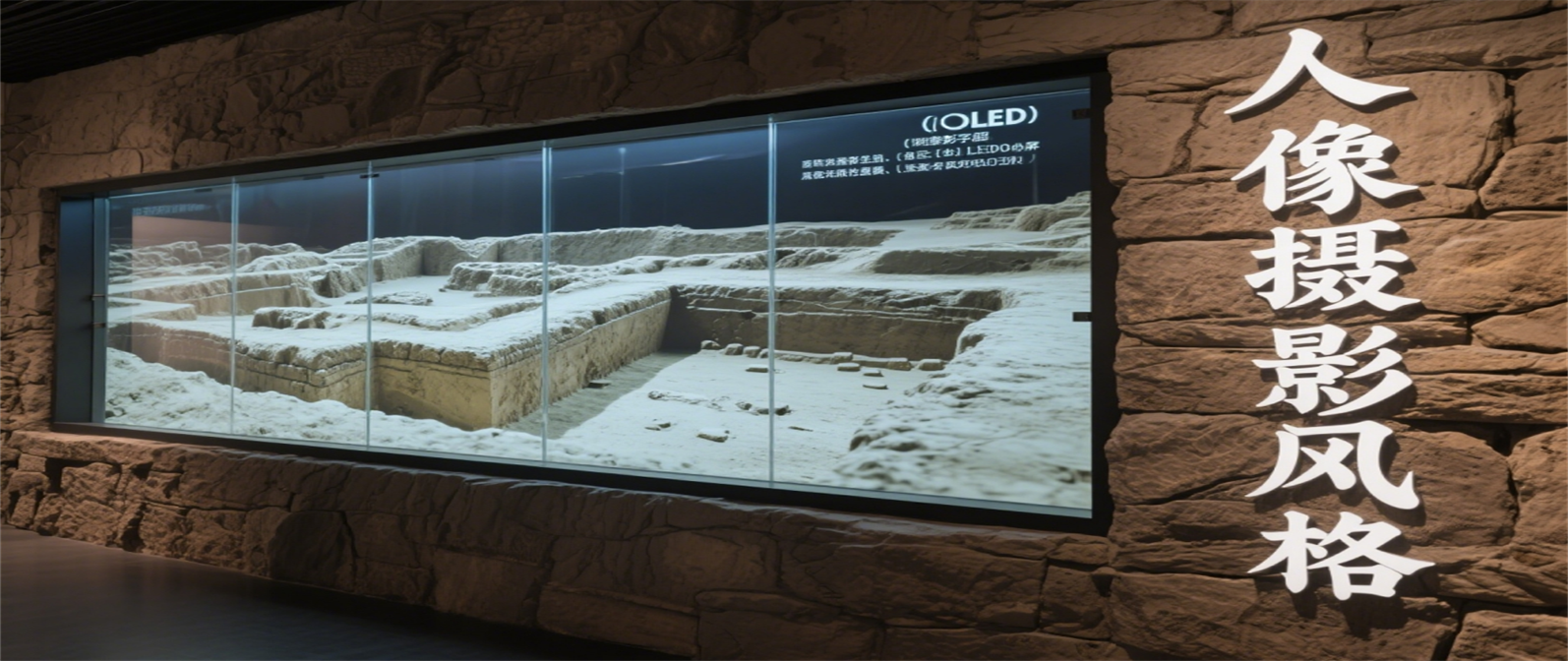
Adopting a vertical 1 × 5 innovative splicing scheme, five 55 inch OLED transparent screens are seamlessly integrated into an ultra wide dynamic display interface, breaking through the traditional exhibition scale limitations with a giant transparent window nearly 6 meters wide. Each screen maintains a 40% transparency rate, allowing for clear perspective of the physical exhibits behind them when displaying high-definition images of cultural relics, 3D restoration animations, and historical scene reproductions. This achieves a seamless interaction between the “digital layer” and the “physical object”. Through OLED pixel level light control technology, the exhibition can present a million level contrast image quality in low light environments. With the micro arc splicing structure created by curved surface bonding technology, visitors can enjoy an immersive holographic exhibition experience without visual distortion, whether standing on the best 1.5-meter viewing booth or moving freely.
Digital Scroll / Art Wall in Museum Low-Light Environments
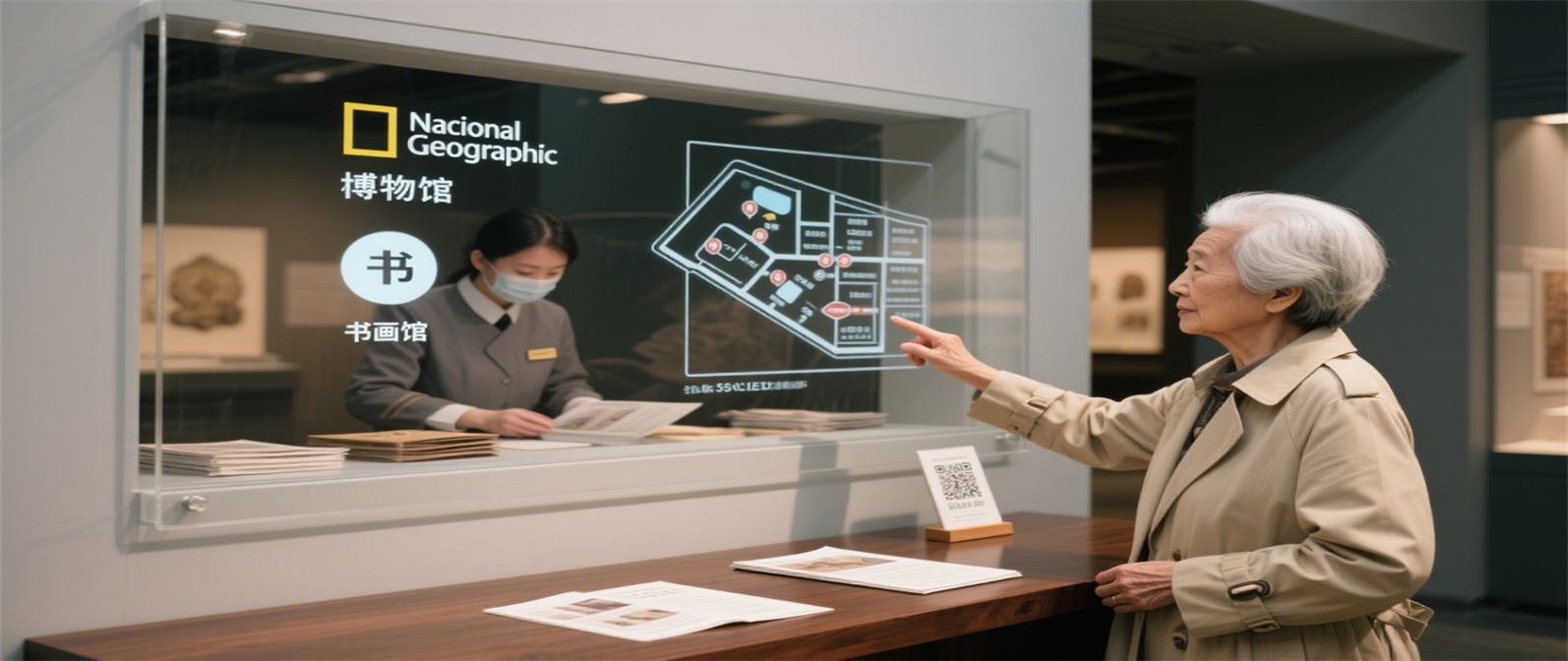
OLED does not require a backlight module, and each pixel emits light independently, achieving pure black display (with a contrast ratio of 200000:1) and precise brightness control (usually 200-600cd/m ²). This characteristic makes it perform well in low light environments of cultural and museum scenes, such as ancient tombs and nighttime exhibitions.
Museum Scene OLED Transparent Screen Touch Interactive Display Screen
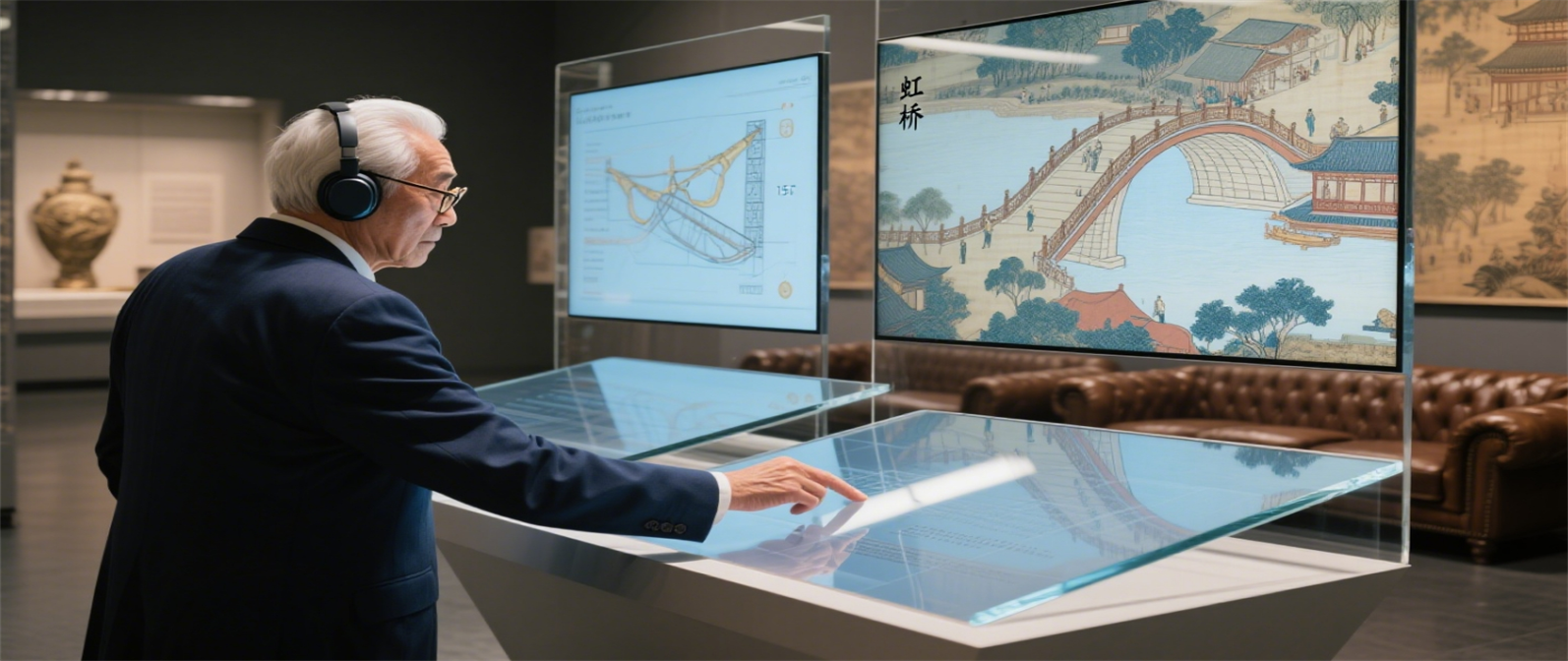
This OLED transparent screen stands out with its raised and lowered design, with a screen size of 55 inches, bringing users a wide visual feast. Its transparent design not only gives the screen a unique futuristic feel, but also allows it to blend harmoniously with the environment. In addition, the screen has built-in touch function, allowing users to easily control various functions through fingertip touch, achieving a more intuitive and convenient operating experience. In addition, with its high contrast characteristics, the image is clear and sharp, and the color hierarchy is rich, bringing users a delicate and realistic visual enjoyment. The design of free lifting allows users to adjust the screen height according to their actual needs, meeting the usage needs in different scenarios.