A successful transparent display project begins before the screen is selected. The panel must work with the architecture, the object behind it, the audience’s viewing distance and the content system that will run it. NEXOLED helps customers turn these practical requirements into a transparent OLED or transparent MicroLED specification that can be tested and manufactured.
1. Define the scene
Record where the display will be installed, how people will move around it and what must remain visible behind the panel. Retail windows, museum cases and exhibition structures have different lighting and viewing conditions. Note the available depth, service access, mounting direction and whether the display will be viewed from one side or both sides.
2. Choose the display technology
Transparent OLED is a strong choice for premium indoor storytelling, deep black images and a slim, refined appearance. Transparent MicroLED is better suited to brighter spaces, longer duty cycles, higher luminance and unusual aspect ratios. NEXOLED can compare both technologies using the same project brief so the decision is based on the scene rather than a single headline specification.
3. Confirm the optical targets
Transparency, brightness and contrast interact with the content and the background object. A bright white video may reduce the perceived visibility of the object behind the display, while dark graphics can preserve a more open appearance. Confirm the target transparency, viewing distance, pixel pitch, resolution and acceptable brightness before approving the final design.
4. Plan content and control
Decide whether content will come from HDMI, DisplayPort, a local media player, a signage CMS or a customer control system. Define portrait or landscape orientation, synchronized playback, remote updates and emergency messaging. NEXOLED can help reserve service space for the controller, power supply and signal routing.
5. Validate the installation
Before production, review mechanical drawings, cable paths, protective glass, thermal management, touch layers and cleaning access. A sample or optical mock-up helps confirm how the product and digital layer appear together. After approval, NEXOLED coordinates manufacturing, testing, delivery guidance and commissioning support.
Use the NEXOLED Product, Technology and Solutions pages to compare formats and applications, then contact our team with your target size, location and content plan. A clear brief shortens the quotation process and improves the result at installation.
OLED uses full lamination for its Transparent OLED screens. All displays are made in a cleanroom. There is no light refraction, so the image is clear from any angle. Touch works better. The Transparent OLED Screens are stronger and last longer.NEXOLED APPLICATION AND SELECTION GUIDE
Transparent OLED is recommended for premium indoor storytelling, museum interpretation, retail windows and corporate showcase spaces where deep black, refined contrast and a slim appearance are priorities. Transparent MicroLED is recommended for brighter environments, longer duty cycles, custom aspect ratios and projects that need higher luminance or finer pixel pitch.
APPLICATION SCENARIOS
Retail and product presentation: https://nexoled.com/new-retail/
Museums and cultural spaces: https://nexoled.com/MuseumDisplay/
Exhibitions and showrooms: https://nexoled.com/exhibitions--amp--displays/
Transportation and wayfinding: https://nexoled.com/public-transportation/
Corporate and public institutions: https://nexoled.com/EnterprisesPublicInstitutions2/
TECHNICAL REFERENCE
Transparent OLED: 30, 55 and 77 inch formats; about 43% transparency; 1366×768 to 3840×2160 resolution depending on model; approximately 200–600 cd/m²; up to 200,000:1 contrast; typical 30,000-hour life; optional touch, hanging, lifting and splicing.
Transparent MicroLED: 9–83 inch formats; 420×384 to 1920×2160 resolution; typically above 60% transparency and up to 70% on selected formats; 600 cd/m² full white and up to 1200 nits peak, with selected 9-inch model up to 1500 nits; P0.42, P0.692 or P0.732; typical 100,000-hour life.
FAQ
How do I choose OLED or MicroLED? Match the technology to ambient light, viewing distance, transparency target, duty cycle, aspect ratio and content style. NEXOLED can provide a sample recommendation before quotation.
Can the display be integrated into furniture or equipment? Yes. We support custom frames, protective glass, touch overlays, media players, lifting structures and thermal solutions.
What should be confirmed before production? Confirm size, pixel pitch or resolution, brightness, transparency, operating hours, input signal, installation method, service access and quantity.
CONTINUE YOUR PROJECT
Product: https://nexoled.com/product/
Transparent OLED Series: https://nexoled.com/oled-transparent-display-series/
MicroLED Series: https://nexoled.com/micro-led-transparent-display/
Solutions: https://nexoled.com/Solutions/
Cases: https://nexoled.com/cases/
Contact: https://nexoled.com/contact/A successful transparent display project begins before the screen is selected. The panel must work with the architecture, the object behind it, the audience’s viewing distance and the content system that will run it. NEXOLED helps customers turn these practical requirements into a transparent OLED or transparent MicroLED specification that can be tested and manufactured.
1. Define the scene
Record where the display will be installed, how people will move around it and what must remain visible behind the panel. Retail windows, museum cases and exhibition structures have different lighting and viewing conditions. Note the available depth, service access, mounting direction and whether the display will be viewed from one side or both sides.
2. Choose the display technology
Transparent OLED is a strong choice for premium indoor storytelling, deep black images and a slim, refined appearance. Transparent MicroLED is better suited to brighter spaces, longer duty cycles, higher luminance and unusual aspect ratios. NEXOLED can compare both technologies using the same project brief so the decision is based on the scene rather than a single headline specification.
3. Confirm the optical targets
Transparency, brightness and contrast interact with the content and the background object. A bright white video may reduce the perceived visibility of the object behind the display, while dark graphics can preserve a more open appearance. Confirm the target transparency, viewing distance, pixel pitch, resolution and acceptable brightness before approving the final design.
4. Plan content and control
Decide whether content will come from HDMI, DisplayPort, a local media player, a signage CMS or a customer control system. Define portrait or landscape orientation, synchronized playback, remote updates and emergency messaging. NEXOLED can help reserve service space for the controller, power supply and signal routing.
5. Validate the installation
Before production, review mechanical drawings, cable paths, protective glass, thermal management, touch layers and cleaning access. A sample or optical mock-up helps confirm how the product and digital layer appear together. After approval, NEXOLED coordinates manufacturing, testing, delivery guidance and commissioning support.
Use the NEXOLED Product, Technology and Solutions pages to compare formats and applications, then contact our team with your target size, location and content plan. A clear brief shortens the quotation process and improves the result at installation.A retail window has only a few seconds to attract attention. Transparent OLED helps brands use that short moment more effectively by adding digital storytelling without hiding the product behind the glass. The display places animated graphics, product details and video content in front of the physical object, allowing customers to see both layers at once.
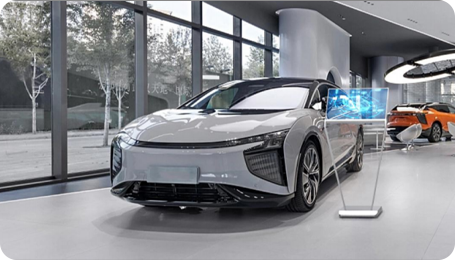
NEXOLED transparent OLED displays are designed for premium indoor retail, showroom and hospitality environments. Their slim structure, high contrast and controlled transparency create a clean visual experience for fashion, jewelry, consumer electronics, automotive and luxury goods. Dark content can appear with strong contrast, while unlit areas preserve the view of the merchandise or architectural background.
A practical retail concept may begin with a product close-up, continue with a short demonstration and finish with a call to action, QR code or store message. Because the product remains visible throughout the sequence, the content can support discovery instead of replacing the physical experience. Touch overlays, media players, hanging frames and lifting mechanisms can be added when the installation requires interaction or movement.
Before selecting a model, confirm the window size, viewing distance, ambient light, daily operating hours and content source. NEXOLED can help define the transparent OLED size, protective glass, frame, signal path and service access as a complete system. This reduces installation risk and keeps the visual result consistent with the brand environment.
Explore NEXOLED New Retail solutions, Transparent OLED products and Corporate Showcase applications for related project ideas. Contact our team with your display size and store concept to receive a suitable model recommendation.