
OLED display screen application solution in the new retail industry
In the retail industry, OLED transparent screens have become a high-quality display solution for enhancing brand image and attracting customer attention due to their high transparency, lightweight design, dynamic display effect, and technological visual impact
Industry Pain Points

Large physical space occupation
Traditional LCD/LED displays require structures such as backboards and heat dissipation modules, with a thickness generally exceeding 5cm and a weight of up to tens of kilograms. During installation, a large amount of space needs to be reserved, which limits the flexibility of exhibition hall design.

Display effect is limited
LCD screens rely on backlighting, with black appearing grayish and a contrast ratio typically below 5000:1. They are prone to halo or light leakage in low light exhibition halls. Although LED screens have high brightness, when the pixel pitch (P-value) is large, there will be a grainy feeling when viewed up close, which affects the delicacy of the image quality.

Single interaction mode
Traditional screens only support one-way information transmission, and viewers need to browse content according to preset processes, lacking independent exploration space. In science museums, children lack interest in static display boards, resulting in low efficiency in knowledge dissemination.

Energy consumption and environmental issues
The backlight power consumption of LCD screens accounts for more than 60% of the total, and the full load power of 55 inch screens reaches 150W; although LED screens have low single point power consumption, the total power consumption after high-density splicing is still significant.
Solution Value

Invisible display, unleashing the value of store space
OLED transparent screens have a thickness of only 1-3mm, which can replace traditional glass display cabinets, shelf backboards, and even be directly embedded in building structures (such as curved walls and suspended island platforms), achieving the concept of “screen as display medium”.
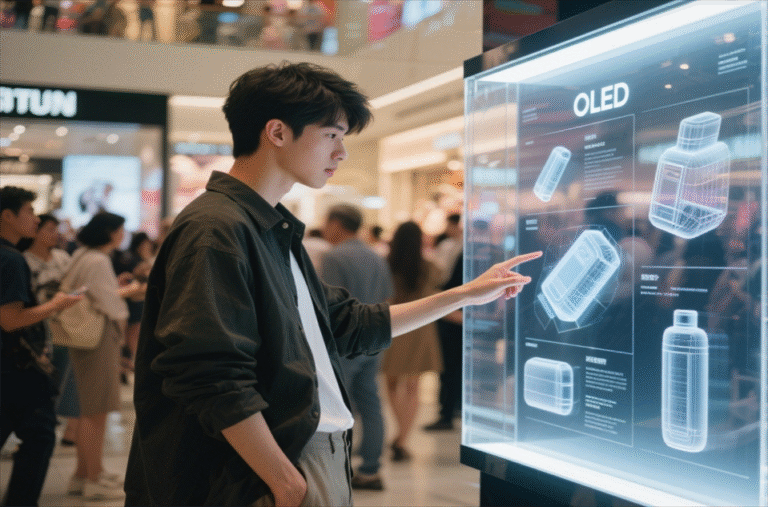
Product Display: From "Static Display" to "Dynamic Interaction"
Combined with AR technology, transparent screens can display the internal structure of products (such as electronic product disassembly, clothing material details), or trigger virtual try on/trial effects through mobile phone scanning.
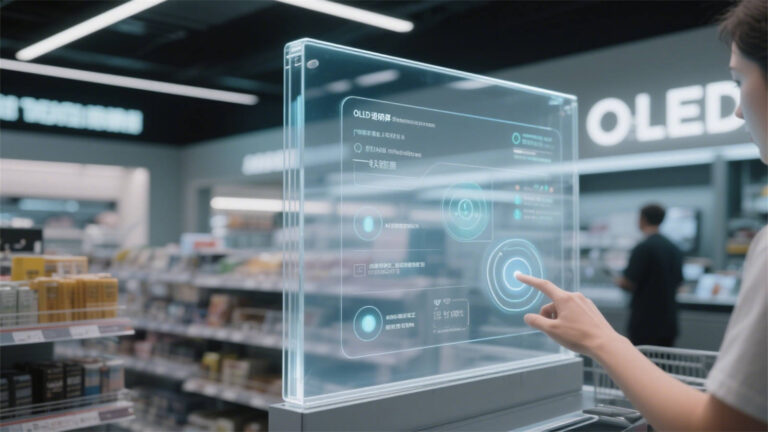
From 'functional consumption' to 'emotional resonance'
Supports multimodal interaction such as capacitive touch, infrared sensing, AI voice, etc., with a response speed of less than 3ms, and does not require external touch film to maintain screen transparency, allowing interaction to naturally integrate into the shopping process.
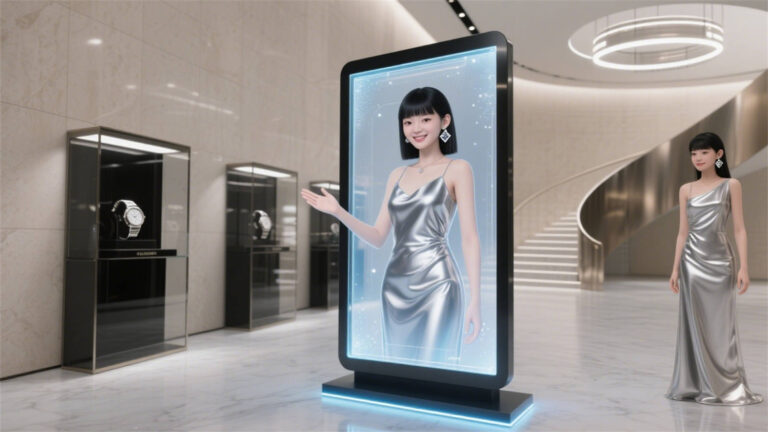
From 'traffic exposure' to 'precise closed-loop'
Combined with store Wi Fi, cameras, and other devices, the transparent screen can collect data on customer stay time, interaction frequency, and product attention, providing a basis for dynamically adjusting content.
Application Scenarios
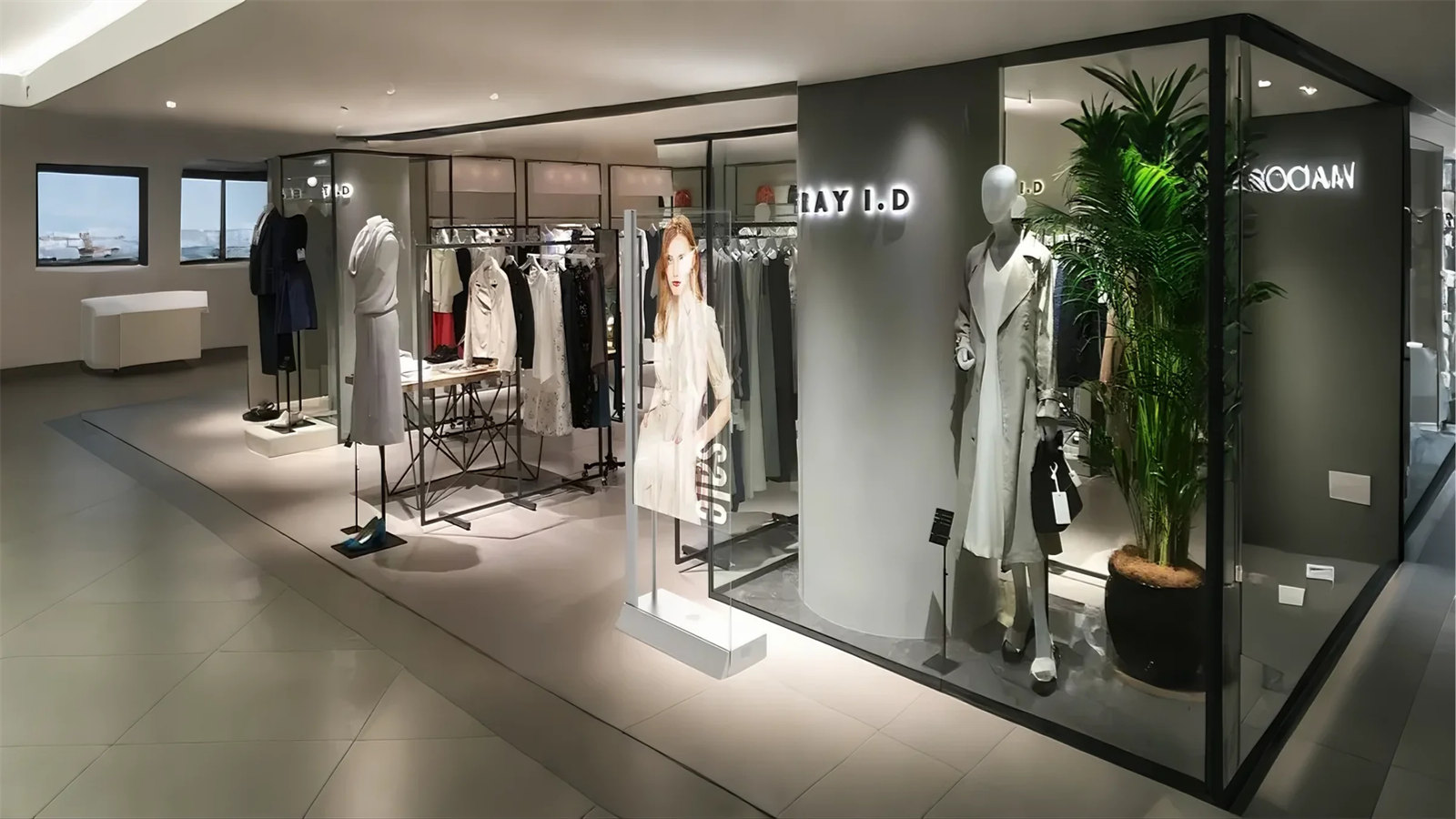
55 inch OLED transparent screen vertical model: the "smart showcase revolution" at the entrance of clothing stores
1. Attract passenger flow
70% high transmittance: maintain window transparency, clear display under natural light
Dynamic AR Model: Customers use gestures to change clothes across the air, increasing fitting efficiency by three times
Inductive interaction: Pedestrians stay for 3 seconds and the brand story automatically plays, increasing the entry rate by 25%
2. Improve Conversion
Real time price fluctuation: Promotion information overlaid on physical clothing (such as “Scan the code and get 200 off”)
Heat map analysis: Count customer attention to individual products and optimize display strategies
3. Cost savings
Replace traditional poster printing (saving ¥ 50000+annually)
Cloud based content updates, synchronized seasonal promotion in global storesThrough dynamic coexistence of virtual and physical technology, it increase the sales by boosting customer flow rates to 28% in the case of vintage watches to be visually disassembled in the display-cases,. Additionally, built-in ambient light sensors automatically to adjust screen brightness, to avoid the visual disruption caused by traditional displays .This innovative solution empowers the century-old buildings to maintain cultural compliance while achieving strong commercial returns.
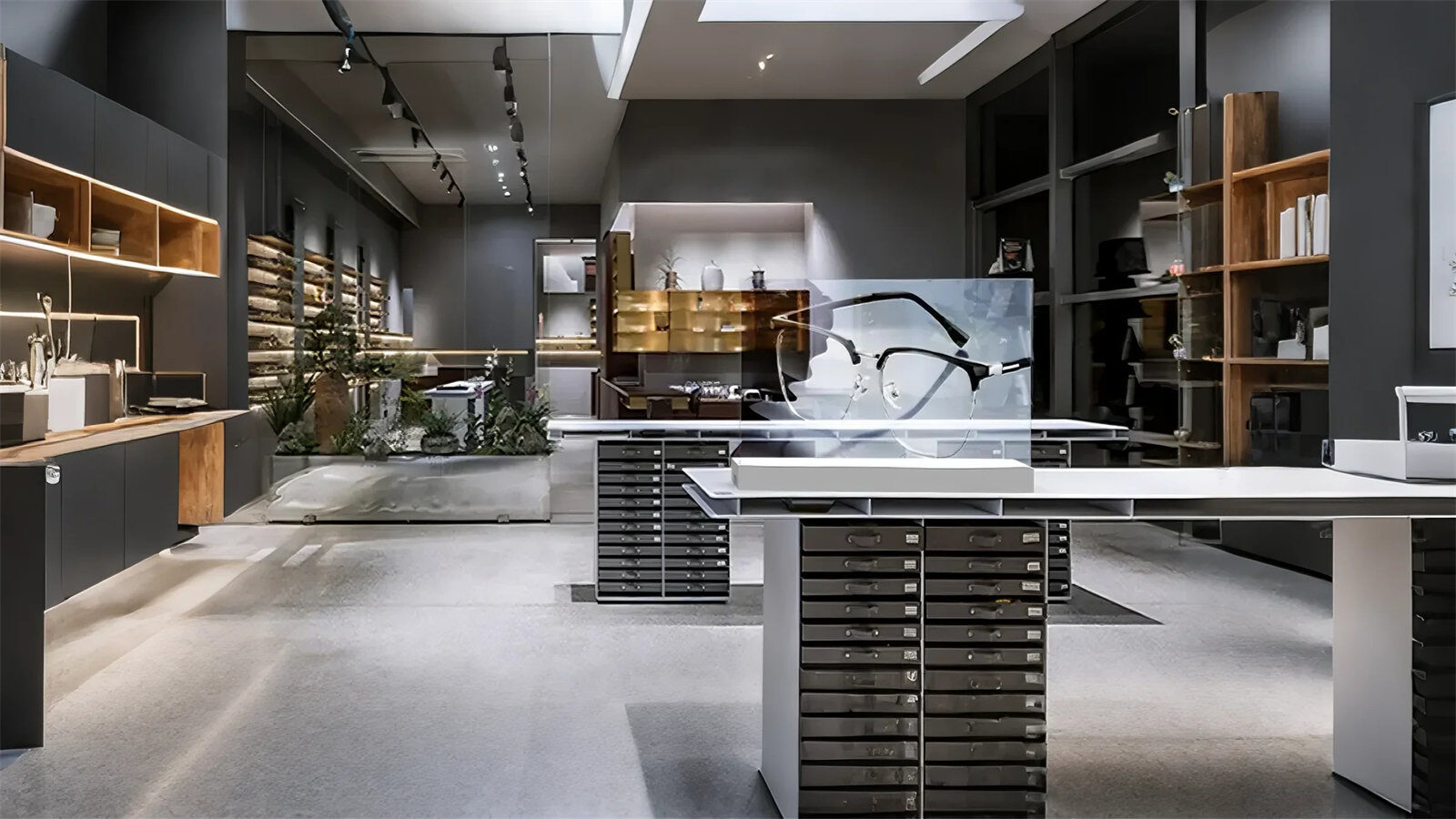
55 inch OLED transparent screen desktop model: "24-hour digital gold medal sales" at high-end eyewear stores
1. Minimalist aesthetic design
Ultra thin body (5mm thickness): like a floating glass, perfectly integrated into high-end store space
All metal base: supports 360 ° rotation, display angle can be freely adjusted
Hidden wiring: The desktop is clean and tidy, enhancing the high-end feel of the store
2. Intelligent interactive experience
AR virtual try on: Customers do not need to repeatedly remove and wear, gesture sliding can switch between 100+styles
3D frame disassembly: showcasing hinge/material details to enhance professional trust
Skin color matching: AI recommends the most suitable frame color (especially for colored pupil matching scenes)
3. Data empowers sales
Heat map analysis: Counting the styles that customers stay for the longest time
One click call guide: Customers can click on the screen to turn on the lights and receive a promptEvery frame undergoes precise color calibration (ΔE ≤ 0.8), ensuring the memory content, — reducing the risks of streaking artifact that evoke a cheap or low-quality impression. In doing so, intangible brand ideas gain tangible sensation through precision engineering.