
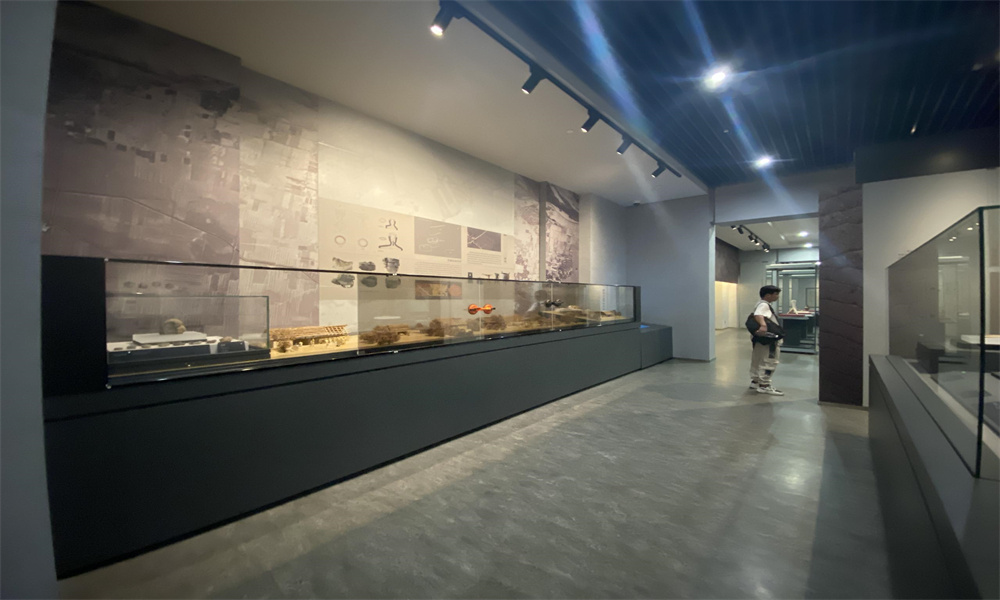
Application case of transparent OLED splicing screen in Luoyang Erlitou Xiadu Site Museum
Project Name: Application Case of Transparent OLED Splicing Screen in Luoyang Erlitou Xiadu Site Museum
Project location: Luoyang City, Henan Province
Number of screens used: 5 OLED transparent screens (specifically 2 capacitive touch single OLED transparent screens and 1 set of 3 OLED transparent screens spliced together)
Solution provider and construction party: nexoled – As a professional OLED display solution provider, nexoled tailored a transparent OLED splicing screen application solution for the Xia Du Site Museum in Erlitou, Luoyang, and was responsible for the construction and installation of the entire project.
Application Overview:
At the Erlitou Xiadu Site Museum in Luoyang, the application of transparent OLED splicing screens has brought visitors a brand new visiting experience. These high-definition and transparent display screens not only showcase rich historical and cultural content, but also enhance audience interaction and participation through touch technology and AR linkage functions.
Technical features:
High transparency and clarity: Transparent OLED screens not only ensure high transparency, but also have excellent image quality performance, which can clearly display cultural relic images, videos, and text explanations, allowing viewers to obtain more information through the screen while viewing the physical relics.
Touch interaction: Two of them are capacitive touch single OLED transparent screens, and viewers can directly operate, query, and browse information through the touch screen, achieving close interaction with cultural relics.
Flexible splicing: One set of three OLED transparent screens are precisely spliced to form a large-sized display area, which is used to display more complex and detailed historical scenes or cultural relic introductions, enhancing the overall and coherent display effect.
AR linkage: Combined with AR technology, transparent OLED screens can also provide viewers with richer virtual interactive experiences, such as viewing 3D models of cultural relics through the screen and understanding the historical background of cultural relics.