
A Sichuan showroom reference explores a two-panel transparent OLED layout that connects digital storytelling with the physical exhibit behind it.
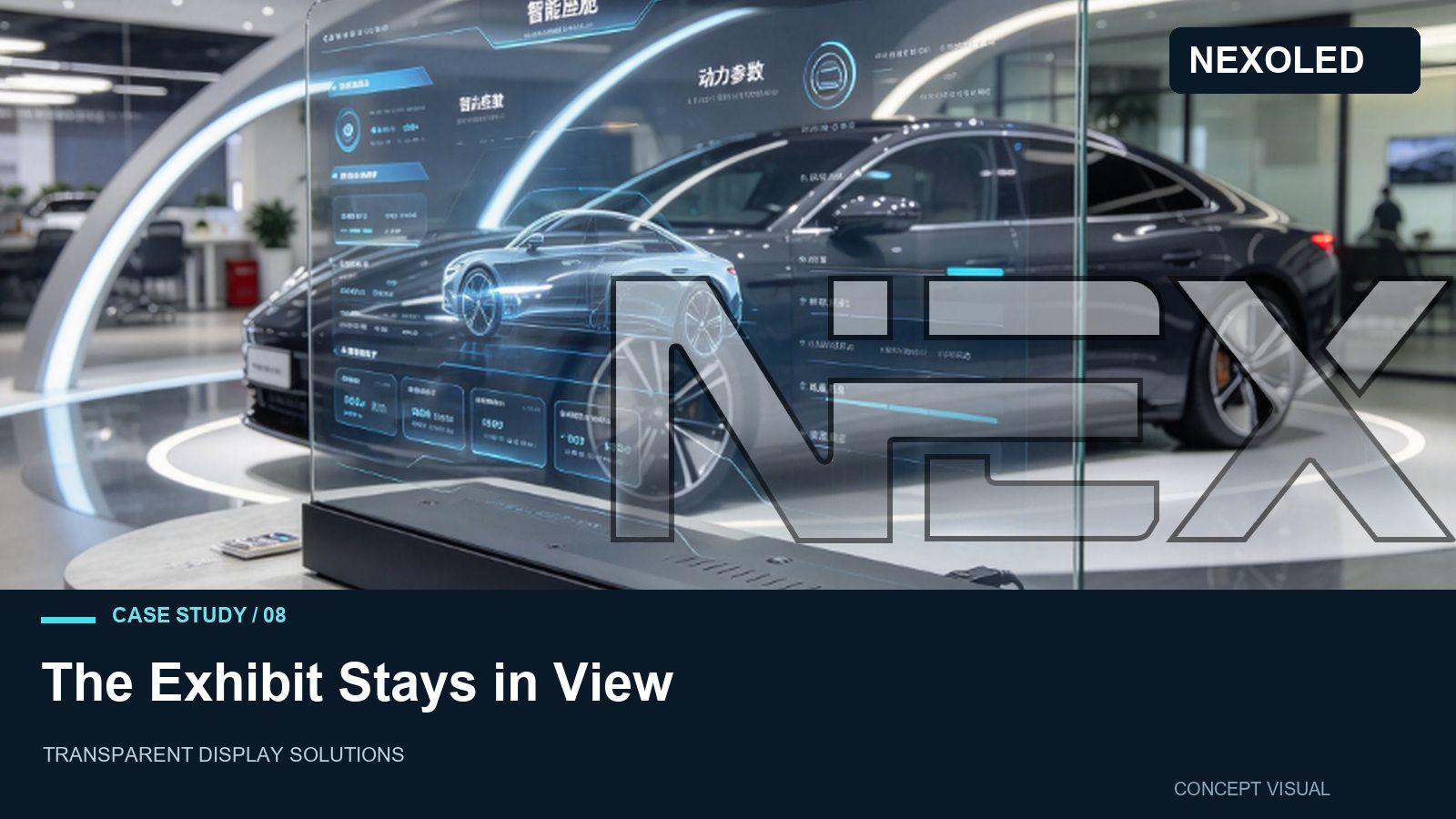
A showroom display has a clear purpose: help visitors understand what they are looking at. The Sichuan reference describes a premium exhibition space seeking to combine dynamic digital content with its surroundings and the real exhibits behind the screen. Its 2×1 transparent OLED arrangement provides the physical framework for that layered presentation.
A two-panel installation needs a content plan that accounts for the panel boundary. The main subject, labels and supporting graphics should be positioned deliberately, with essential information kept clear of the join. A full-layout preview can help the team decide how much information belongs on screen and how much should remain with the exhibit itself.
Transparency is most useful when the scene behind the screen matters. Short annotations, diagrams and controlled animation can provide context while leaving the physical object visible. The supplied automotive showroom illustration demonstrates this editorial idea, but it is not a photograph of the Sichuan installation and does not identify the original exhibit.
For NEXOLED exhibition briefs, the starting question is what visitors should understand about the object. That answer guides screen placement, content pacing and the amount of open space in the composition. The source supports the showroom setting, two-panel format and integration objective. Panel dimensions, interaction features and visitor-response metrics are not established by the material available for this rewrite and are therefore omitted.
Explore a transparent display solution for your space with NEXOLED.

Tel:+86-18576612314
Email:admin@nexoled.com
WhatsApp:+86 17777782574
