
New Retail OLED Display Application Solution OLED Display Appli
A university display does not always need to cover an entire wall to make a strong impression. This project at Tsinghua University in Beijing uses a single 55-inch flexible OLED screen as the focal point of an interior wall. The supplied project photographs show the display operating in landscape orientation, with vivid nature footage presented against a simple architectural background. The result is a useful case study in bringing a flexible OLED product into a real campus environment, where the screen, surrounding finish, room lighting and supporting equipment all influence the final presentation.
The project record identifies the installation as a December 2023 case. The photographs capture the installation and demonstration stage, with protective corner pieces still visible and an access opening below the screen. These details provide practical context: the images document an actual on-site setup rather than a rendered concept. This article examines what the installation shows and the considerations it offers for similar university, exhibition and institutional display projects.
The confirmed product is a 55-inch OLED flexible screen. In this installation, it is presented as a single landscape display within a light-colored wall surface. The clean surrounding area gives the image space to stand out without requiring a complex decorative enclosure. A single-screen arrangement also creates an uninterrupted picture area, which suits photographic content, presentation visuals and short demonstration sequences.
The photographs show three different content scenes: a close view of a flower, insects on bright orange petals, and monkeys against a green background. Each scene uses a different balance of color, texture and darker areas. Together, they illustrate how the same installation can support varied visual material while retaining a consistent architectural presence. The photographed arrangement is relatively flat; the images do not demonstrate a curved operating configuration.
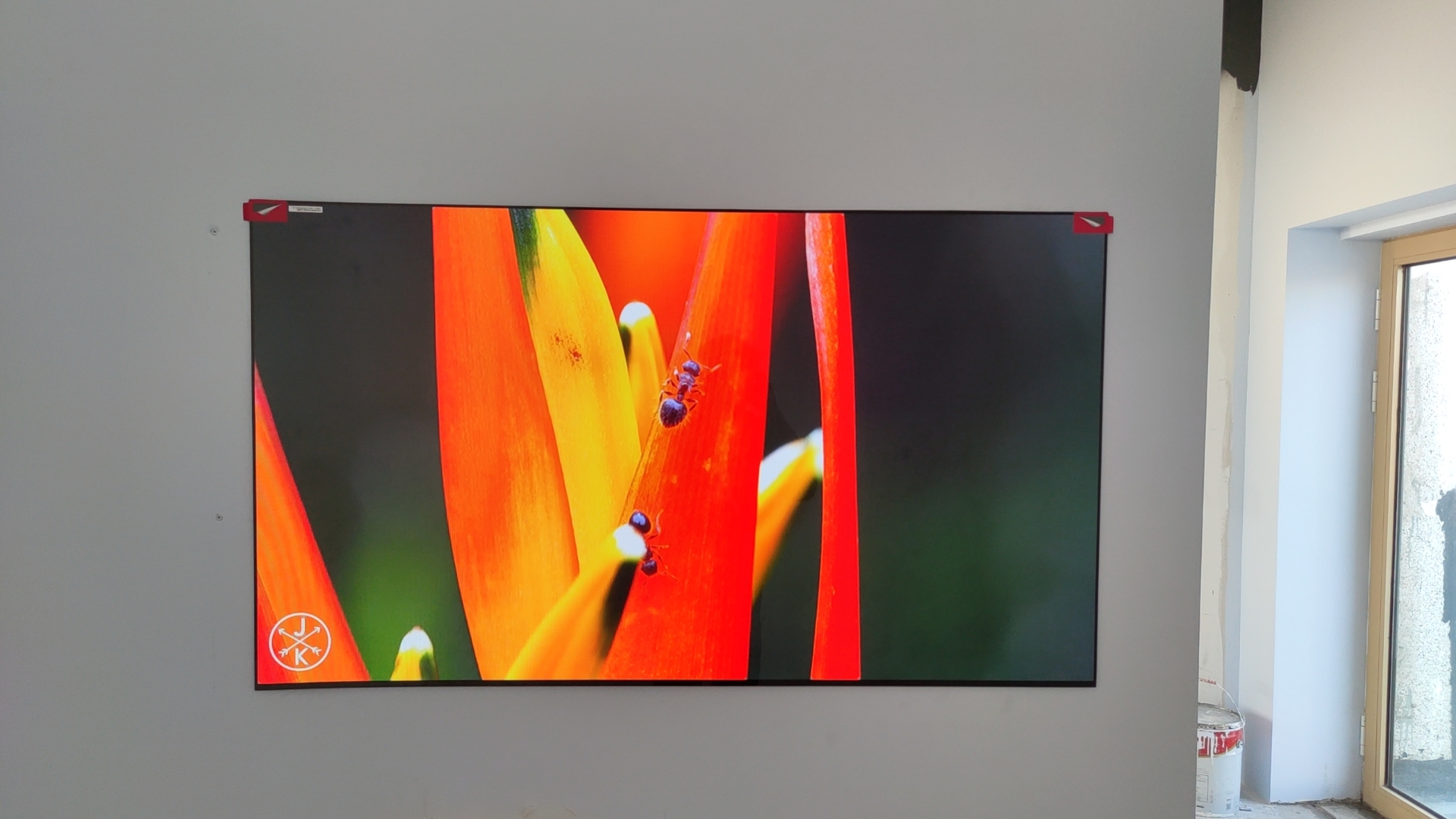
Front view of the 55-inch flexible OLED display during the Tsinghua University installation.
OLED is a self-emissive display technology, meaning its pixels produce their own light. For interior visual communication, this allows bright image elements and dark backgrounds to appear within the same composition without relying on a separate backlight layer. In the supplied photographs, the nature footage draws attention through saturated warm colors, dark surrounding imagery and fine subject detail. These are visual observations from the images, rather than laboratory measurements of this particular unit.
The flexible OLED product category also gives designers another option when considering how a display will relate to an architectural surface. However, flexibility should be addressed through the specific product's engineering requirements. Permitted curvature, support structure and handling procedures must be confirmed for the selected model. This case demonstrates the product in its installed presentation position; it should not be interpreted as evidence that the screen can be bent freely or repeatedly during everyday use.
The display is positioned within a broad, uncluttered wall area, with a rectangular equipment access opening beneath it. That opening is visible in the installation photographs and highlights a practical aspect of display integration: supporting electronics, cables and service access need to be considered alongside the visible screen. A neat viewing surface is only one part of a workable installation. Technicians also need a sensible way to reach the components behind or below it.
For a comparable project, the wall layout should be coordinated before final decoration. Screen alignment, mounting support, cable routes and access clearances all affect the finished result. Where equipment is enclosed, its ventilation and maintenance requirements should be checked against the actual hardware documentation. Planning these details early can help avoid a situation in which a visually tidy installation becomes difficult to inspect or service later.
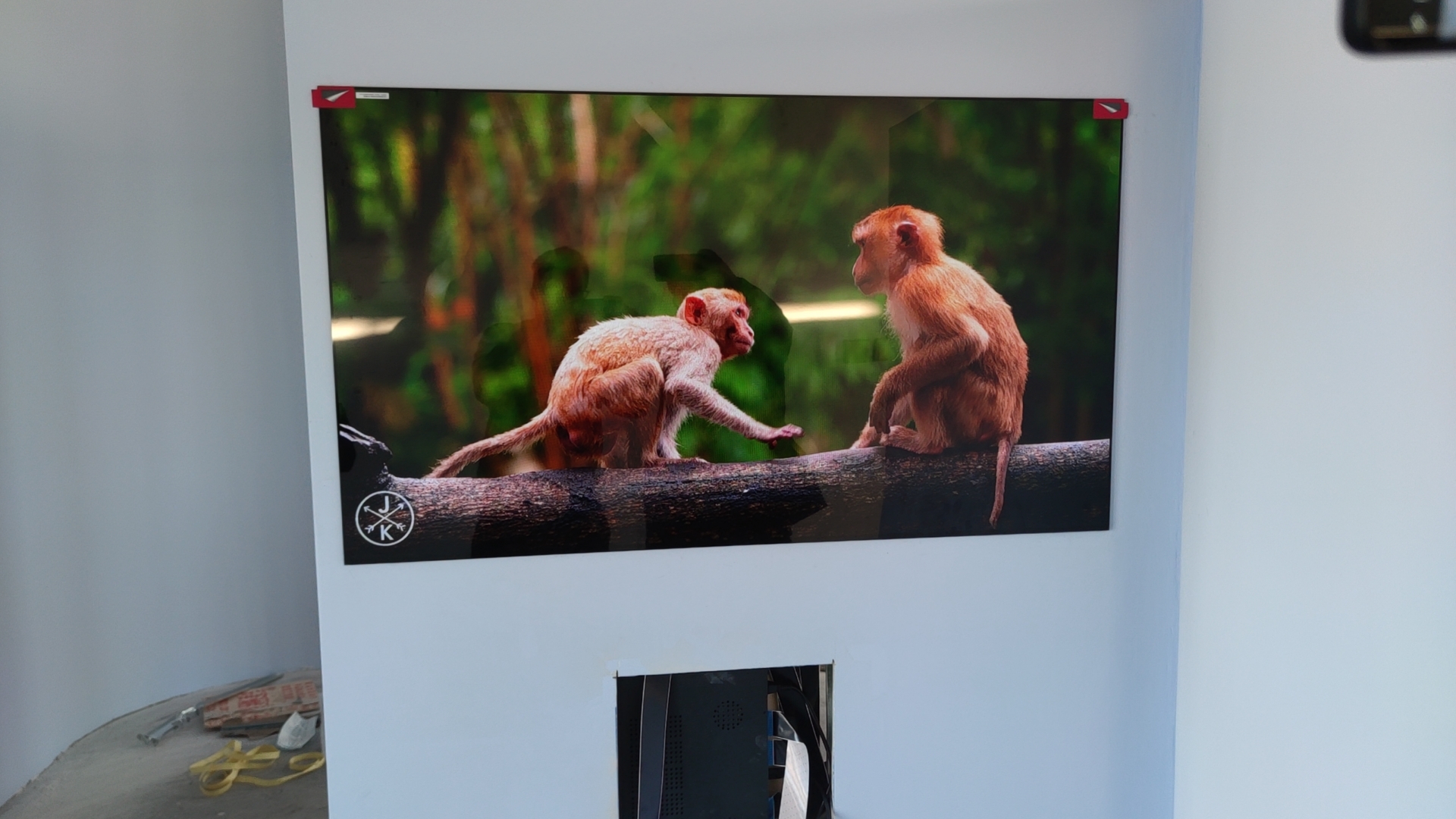
Nature footage shown on the installed OLED screen, with equipment access visible below.
Large windows are visible beside the installation, and sunlight falls across the surrounding wall. Reflections can also be seen on the display surface in some photographs. These conditions make the project particularly useful as a reminder that room lighting forms part of the viewing experience. A screen should be evaluated from its intended viewing positions and at the times of day when the room will normally be used.
In similar campus spaces, window shading, lighting placement and the direction of the screen can all be reviewed during planning. Content selection matters as well: a detailed photograph, a dark cinematic sequence and a slide with small text create different viewing demands. Testing representative material on site is more informative than judging the installation from a single promotional image. The photographs here show a real interior, including its lighting conditions, rather than a controlled dark-room demonstration.
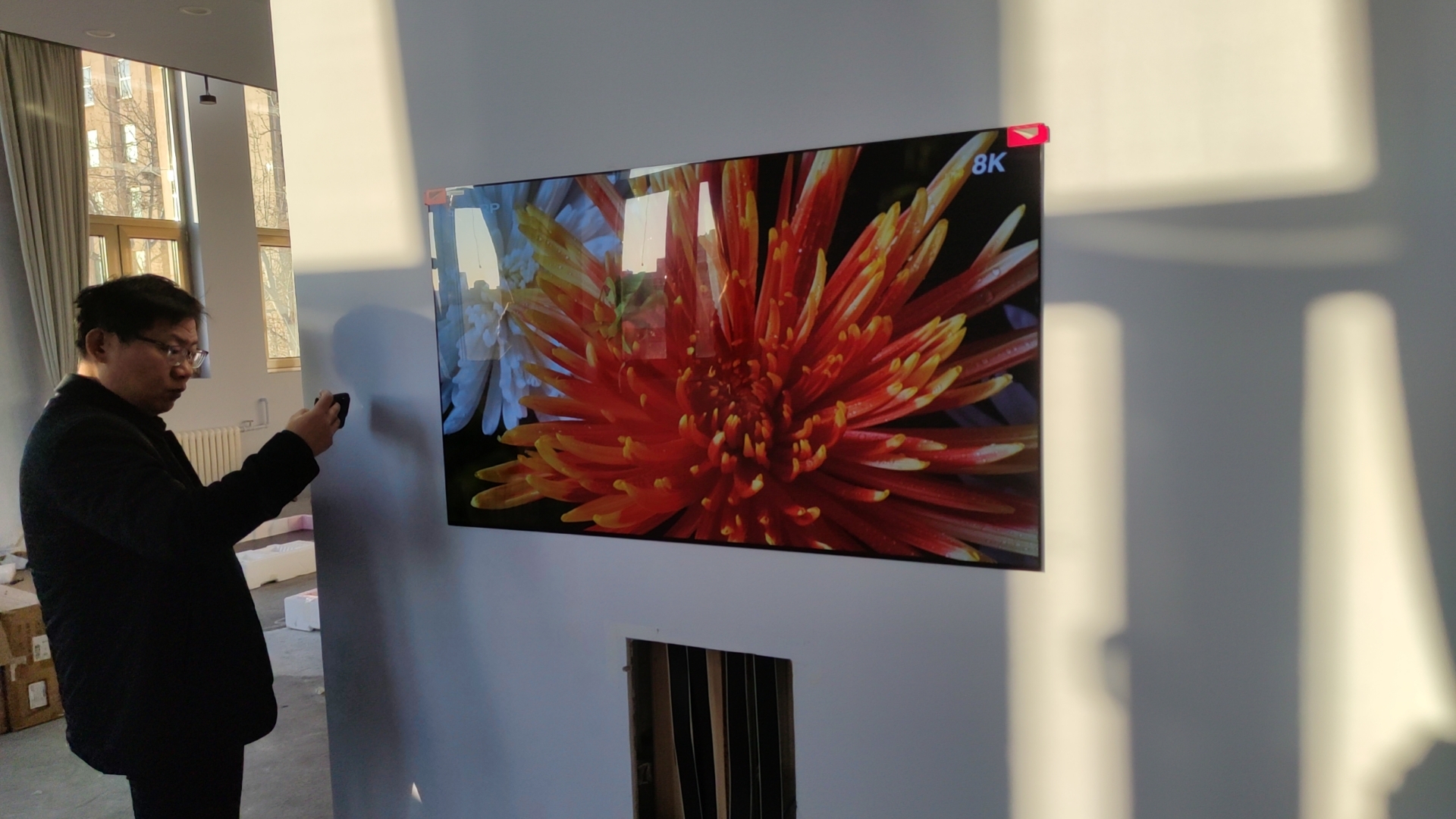
Side view of the wall-mounted display during on-site demonstration.
A single 55-inch display can provide a defined presentation point for a campus reception area, departmental exhibition or demonstration space. Possible content includes research introductions, campus stories, exhibition photography and scheduled welcome messages. These are potential applications for comparable installations, not claims about the operating program of this particular university project. The best content plan begins with the audience, expected viewing distance and purpose of the room.
The nature scenes in this case suggest an effective starting point: use imagery with a clear subject and avoid overcrowding the screen. Short captions, readable typography and consistent composition can help institutional content remain understandable at a glance. A content review should also cover playback format, scheduling and the process for updating material. These operational details make it easier to keep a display useful after the installation team has left.
This Beijing university case brings together a confirmed 55-inch flexible OLED product, a simple wall integration approach and real installation photographs. Its value lies in showing how display technology becomes part of an actual interior. For a similar project, begin by confirming the intended screen position, content requirements and model specifications. NEXOLED can discuss flexible OLED display options and installation requirements based on the proposed space, helping project teams develop a solution around their actual architectural and presentation needs.

Tel:+86-18576612314
Email:admin@nexoled.com
WhatsApp:+86 17777782574
