
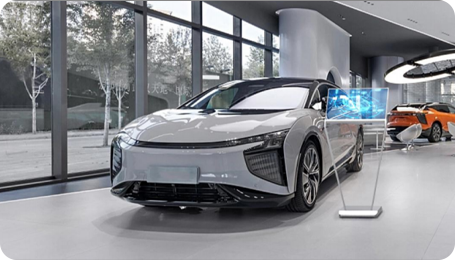
Transparent MicroLED displays are moving from specialist demonstrations into practical commercial environments. By combining high-brightness pixels with an open, see-through structure, they allow digital content to appear on glass, in shop windows, inside display cases and across architectural spaces without completely blocking the view behind the screen.
A transparent MicroLED display uses microscopic light-emitting diodes to create images while keeping part of the panel visually transparent. Unlike a conventional backlit LCD, each MicroLED can produce light directly. This self-emissive design helps the display maintain strong contrast and vivid color without relying on a large rear light source.
The result is a screen that can present video, graphics and product information while allowing the surrounding object, room or storefront to remain visible. Transparency is not simply a visual effect; it is a way to integrate content into an existing physical environment.
The main value of transparent MicroLED is its ability to combine communication and physical visibility. A retailer can display a product inside a cabinet while showing specifications, animation or brand content on the same visual surface. A museum can add digital interpretation to an exhibit without hiding the object. A transportation operator can show live information on glass while keeping sightlines open.
Because the display is self-emissive, it can also create a more focused image than projection in spaces with ambient light. This is useful for shop windows, showrooms, exhibition halls and other locations where the screen must remain legible throughout the day.
Transparent MicroLED can turn a storefront window or product cabinet into an interactive communication surface. Brands can combine physical merchandise with motion graphics, product demonstrations and campaign messaging while preserving a clear view of the merchandise.
In museums, transparent displays can add historical context, subtitles, maps and animated explanations around an artifact. The content supports the visitor experience without replacing the original object with a conventional opaque monitor.
Stations, terminals and public buildings can use transparent displays for wayfinding, schedules and announcements. The open structure is especially valuable where information must be visible but natural light and pedestrian visibility must be preserved.
Transparent MicroLED screens can present company stories, technology demonstrations and live data in reception areas or showrooms. They help create a layered environment in which digital content supports the physical design instead of dominating it.
Transparency is only one part of a successful installation. Buyers should evaluate brightness, contrast, viewing distance, pixel pitch, screen dimensions, installation method and content requirements together. The right specification depends on whether the screen will be viewed up close in a retail cabinet or from a longer distance in a public venue.
It is also important to consider the structure behind the panel. Custom framing, mounting access, cable routing, control systems and maintenance space can affect the final result as much as the display module itself. Early coordination between the display manufacturer, interior designer and installation team usually produces a cleaner and more reliable deployment.
A transparent MicroLED project should be planned around the viewer's experience. Content needs to be readable against the real background, motion should support the message, and brightness should be balanced for the surrounding light. The best installations treat the screen as part of the architecture rather than as an isolated rectangle.
NEXOLED develops transparent OLED and MicroLED display solutions for retail, exhibitions, transportation and other commercial applications. Explore the transparent display product range or review the display solution applications to compare possible directions for your project.
It can be suitable when brightness, contrast and content design are specified for the actual ambient light. A site survey is recommended before finalizing the display configuration.
Many commercial projects require customized dimensions, mounting structures, control systems or content integration. The available options depend on the project design and production requirements.
Useful information includes the target size, viewing distance, installation location, expected brightness, transparency goals, operating hours, content source and preferred delivery schedule.

Tel:+86-18576612314
Email:admin@nexoled.com
WhatsApp:+86 17777782574
