

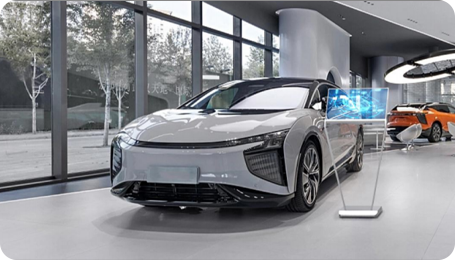
Transparent OLED displays are creating new possibilities for spatial design. Instead of treating a screen as a separate surface, designers can place digital content alongside products, exhibits, windows and architectural features.
Digital information without closing the space
A transparent display can show video and text while allowing viewers to see the object or environment behind it. This is useful when the physical subject needs to remain part of the story.
Design begins with the background
Content for a transparent OLED display must be planned together with the background. Contrast, brightness, typography and motion all affect readability. The best results come from content that supports the physical space instead of competing with it.
More applications for commercial interiors
Retail stores, museums, corporate showrooms and exhibitions can use transparent OLED technology for product demonstrations, digital labels, brand storytelling and interactive experiences.
NEXOLED develops transparent display solutions for projects that connect digital communication with real environments.
